

Love, Loneliness, and Borrowed Evenings


The wind and rain that blew through the open window in front of his seat carried with it a strange sense of loss, the kind that does not arrive with a single event but accumulates quietly over months, settling into the body the way dampness settles into old walls. It drifted across the shabby streets where people had huddled under shop awnings and bus stops, seeking temporary relief from the sudden showers that had arrived without warning, as if the sky too had decided without reason that it could no longer hold itself together. Aashay watched them through the half-open window, his head resting lightly against the cool glass, earbuds tucked into his ears, a song playing softly in the background that failed entirely to move the slow heaviness inside him, the kind of heaviness that music once touched and no longer could.
At the signal, the bus halted longer than usual. The pause stretched into an uncomfortable wait. Outside, horns blared impatiently, drivers shouted, and abuses flew across the humid air like children throwing stones at nothing in particular. Something was wrong. Aashay had woken up that morning with a strange feeling, an uneasiness that did not announce itself clearly but lingered quietly beneath everything he did, the way a wrong note lingers in a song even after it has passed, and now, as the day crawled towards its end, that feeling seemed to gather strength rather than dissolve.
He leaned slightly forward and looked past the bus window.
There had been an accident ahead.
The road had turned into a small theatre of curiosity and chaos. Some people had stepped out of their cars, leaving engines running, drawn irresistibly towards the spectacle of misfortune that did not belong to them. Others remained inside their vehicles, staring from behind closed windows, their expressions hovering somewhere between concern and indifference, as though they had not yet decided which of the two required less of them.
In the car beside the bus sat a small family.

The woman in the passenger seat turned around and handed something to a child in the back while the man in the driver's seat laughed softly at something she said. Their conversation was lost behind the glass, but their ease with each other was visible even from a distance, the kind of ease that does not perform itself but simply exists, warm and unself-conscious, like a room that has been lived in long enough to stop being arranged. They looked contained within something invisible and whole.
Aashay watched them longer than he should have.
He had never known what that felt like.
Life had never been particularly cruel to Aashay, but it had never been generous either. From a distance, his life appeared almost enviable, a young man in his early twenties, quietly good-looking, with a charming smile that had often earned him compliments from women who barely knew him. He was not conventionally handsome. His complexion carried the warm wheatish shade common in the country; his eyebrows were thick, his hair dark and dense; his forehead was slightly high above a sharp nose; and he carried the healthy frame of someone who had grown into adulthood without much indulgence or celebration either.
Yet there was something in his presence that made people look twice.
Perhaps it was the smile.
Or perhaps it was his eyes, because if someone looked closely enough, they would notice that the smile rarely travelled upward. His lips curved easily, out of habit more than feeling, but his eyes held a quiet distance, as though they had learned long ago that happiness was something to be observed from a careful remove rather than walked into without hesitation.
The bus remained still.
Rainwater trickled slowly down the glass beside him, each droplet finding its own path downward, and as Aashay watched them slide and merge and disappear, memories began surfacing with the quiet persistence of old wounds that had never fully closed, only learned to stay beneath the surface until something soft and unguarded brought them up again.
Hospitals.
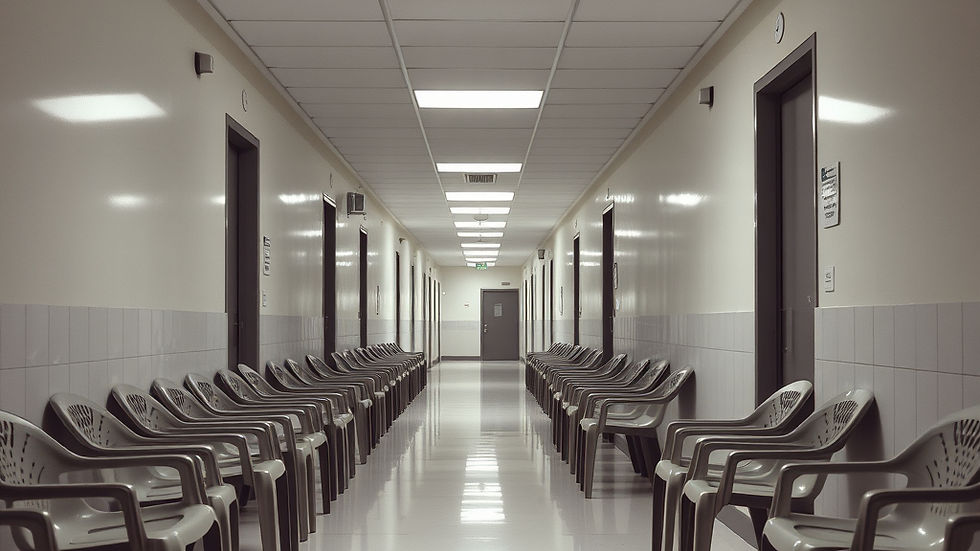
He had spent a large part of his childhood inside them. White corridors, plastic chairs, the smell of antiseptic, the faint beeping of monitors somewhere down the hall, and always the particular silence of waiting rooms, a silence that was not peaceful but suspended, as though everyone inside had agreed without speaking to hold their breath together. Other children had playgrounds and cricket fields. Aashay had waiting rooms and medical charts, and the specific education that comes from watching a parent suffer without being able to do anything except be present.
He remembered the first time he had understood that his mother's illness was not something temporary, that it was not a chapter with an ending but a condition with a rhythm, one that would quietly dictate the shape of their household for years. He must have been eleven or twelve, old enough to read the anxiety in his father's face and young enough to still believe that understanding the problem would somehow fix it.
His mother had been chronically ill for as long as he could remember. Medicines on the dining table, hospital files stacked inside cupboards, doctor appointments that arrived and recurred like a second calendar running alongside the real one. Childhood ended early in homes like his, not with a single dramatic moment but with a series of small adjustments, each one reasonable on its own, that together added up to something irreversible.
He remembered coming back from school and heating food on the stove because his father had been delayed at work. He remembered helping his mother sit up in bed, holding her shoulders while she struggled through the dull ache that lived permanently inside her body, and he remembered the specific care he had learned to take, the way you lower a glass rather than set it down.
But there was one memory that had never left him.
He must have been twelve.
It was around mid-afternoon, and the electricity had gone out. The ceiling fan had stopped, and the room had filled with the thick, pressing stillness of summer heat. His mother had woken up gasping, struggling to breathe through the pain in her chest, and his father was not home yet.
For a moment, Aashay had simply stood there in the room, a boy in the middle of something that required a man, not knowing what to do, not with panic but with the particular paralysis of someone confronting for the first time the full weight of a situation that has been building for years.
Then he had rushed forward. Held her hand while she tried to sit up. He remembered the way her fingers tightened around his wrist, not with strength but with fear, a different thing entirely, and he remembered that her fear did not frighten him as much as it steadied him, the way extreme cold sometimes feels, briefly, like warmth.
“Aashay...” she had whispered.

He did not remember what he said to her. Only that he kept repeating something softly into the abyss that existed between him and his mother. Until her breathing slowed again, and that somewhere in those minutes, sitting beside her bed in the airless room while the city thrived outside, he had understood something that no child should have to understand before he is ready.
Some people become adults without ever being children.
The bus jolted slightly as a motorbike squeezed through the narrow gap between vehicles.
His phone vibrated.
He did not have to check the screen to know who it was.
Her name appeared anyway.
She had walked into his life with the ease of a conversation that was never supposed to matter. It had started in the office cafeteria... a seat was politely asked for, a voice carrying the casual familiarity of someone who had grown comfortable speaking to strangers, and the conversation that followed had been simple enough; work, small observations, the kind of exchange that leaves nothing behind.
Except that she listened.
That was what surprised him most, because she listened in a way people rarely did, not with curiosity searching for something interesting, but with patience that asked for nothing in return, the kind that makes a person feel, perhaps for the first time in a long while, that what they are saying is worth hearing.
Over the weeks, the conversations became longer. Tea breaks stretched into quiet confessions that neither of them had planned. She spoke about her life in fragments, a marriage that had slowly transformed into a partnership of responsibilities rather than affection, the routines that filled her days, the invisible loneliness that sometimes followed her home and sat with her in rooms that were full of people and still somehow empty.
She had a son.
Seventeen.
Somewhere in those shared silences and stolen afternoons, something shifted between them, the way light shifts in a room when a cloud passes, slowly enough that you cannot say exactly when it changed but clearly enough that you know it has. The first time she held his hand, Aashay felt a warmth spread through him that was not merely desire but something older and more complicated, the relief of being touched without expectation, of being seen without having to perform.
For a while, he allowed himself to believe that comfort meant love.
But love rarely survives inside borrowed spaces, in the gaps between someone else's real life, in the hours that exist only because they have been quietly set aside for something that cannot be named in daylight.
His phone vibrated again.
Where are you? Still in traffic?
Another message followed almost immediately.
I’ll be late today. Aarav has coaching.
Aarav.
The boy's name settled in him differently than it once had.
Aashay remembered the one time he had met him outside the office building, a tall teenager arriving on a motorbike, easy in his body the way young people are when the world has not yet asked too much of them. She had introduced them with the practised casualness of someone who had rehearsed the moment without quite meaning to.

“This is Aashay, from my office.”
The boy had nodded politely and looked at his phone.
For a brief moment, Aashay had felt something that was not jealousy, not quite, and not discomfort, but something closer to displacement, the feeling of having accidentally stepped into a room where someone else's life was already complete, all the furniture arranged, all the relationships settled, and no space left for anything new because nothing new was needed.
Outside, the crowd near the accident had begun to shift. An ambulance had arrived. Two men lifted an injured body onto a stretcher while someone shouted instructions to clear the road, and the siren started moments later, sharp and urgent against the quiet rain, cutting through the noise of the traffic like something that could not be ignored.
Inside the ambulance, through the fogged glass, Aashay could see a woman gripping the injured man's hand, her body leaning towards him with a desperation that needed no translation. She was not just showing concern. She was simply there, entirely and without reservation, the way people are only for the ones they cannot imagine losing.
He watched the vehicle disappear into the distance.
And something inside him settled, not suddenly, not with drama, but with the slow, irreversible clarity of a truth that has been waiting a long time for the right moment of stillness.
He thought of her. He thought of the life she returned to every evening, the husband who shared her house, the son who carried her name, the quiet weight of a family that had existed long before he had arrived and would continue long after he was gone. He thought about how she had never once asked him to stay. How the relationship had always lived inside a set of hours that belonged, ultimately, to someone else.
Those lives were not temporary.
He was.
During restless nights, he had sometimes turned to the language of psychology in search of an explanation that would make the situation easier to bear. He had read about how unresolved childhood attachments quietly shape adult desires, the ways in which loneliness, given enough time and the right circumstances, teaches itself to look like love. He had wondered, with the particular cruelty of self-examination, whether he had simply been searching for the comfort he had lost too early, whether he had found in her patience and presence a version of something he had been denied long before he was old enough to understand what it meant.
But theories are clean, and life is not, and understanding the shape of a wound does not close it, only teaches you to carry it more carefully.
He opened the message box.
His fingers hovered over the keyboard for a moment.
There was no anger in him, no confession waiting to spill, nothing dramatic or final-sounding forming itself into words. Only a quiet exhaustion, the kind that arrives not from effort but from the long, slow work of resisting something obvious, and the particular tenderness that comes when you finally stop.
He typed slowly, without revision.
We should stop this. I don’t think this is right for either of us.
He read the sentence once.
Then pressed send.
The message disappeared into the blue glow of the screen, and for a long moment, he sat with the phone in his hands, not waiting for a reply, not dreading one, simply sitting with what he had done and finding it, unexpectedly, something close to relief.
The bus finally began to move as the traffic cleared ahead.
The rain had stopped completely. The wet roads reflected the dim streetlights in trembling lines that stretched ahead and then bent and disappeared, and the city resumed its evening business around him, indifferent and ongoing, as cities always are.
Aashay removed his earphones and slipped them into his pocket.
He had spent months believing that she had rescued him from loneliness, that in finding her he had found something he had been missing since childhood, some warmth that had been interrupted too early and never properly resumed. He had built, quietly and without full awareness, an entire emotional architecture on a foundation that was never truly his to stand on.
But somewhere between the rain and the ambulance siren and the sight of that woman pressing her husband's hand in the back of an emergency vehicle with every unguarded part of herself, something had shifted irrevocably, a door he had been holding open finally, gently, closing.
The person he had been waiting to be rescued by was not her.
It had always been him.
And as the city lights moved past the window in long, blurred streaks, Aashay felt something he had almost forgotten was possible, the quiet, tentative sensation of beginning again, not from a place of wholeness or resolution, but from something more honest than either.
Not healed. Not certain. Not without the weight of everything that had come before.
But present, at last, in his own life, and for the first time in a very long while, willing to stay there.

Comments